.png)

Common misconceptions abound. A worker may still be deemed an employee even if they agreed to be a contractor, charge GST, submit invoices instead of using a timecard, or work from home.

In British Columbia’s dynamic gig economy and flexible job market, the line between an "employee" and an "independent contractor" is frequently blurred. For employers, hiring contractors often seems like a streamlined, cost-effective way to manage fluctuating workloads. For workers, it can offer the appeal of being your own boss.
However, simply signing an agreement that labels a working relationship as an "independent contractor" arrangement does not make it legally binding in the eyes of the law. If a dispute arises, the BC Employment Standards Branch (ESB), the Canada Revenue Agency (CRA), or the BC courts will look past the contract to examine the true nature of the relationship.
Misclassifying an employee as an independent contractor is a common pitfall that can lead to severe financial penalties, unpaid overtime claims, and massive liabilities for severance pay.
Here is what you need to know about how worker classification is determined in BC.
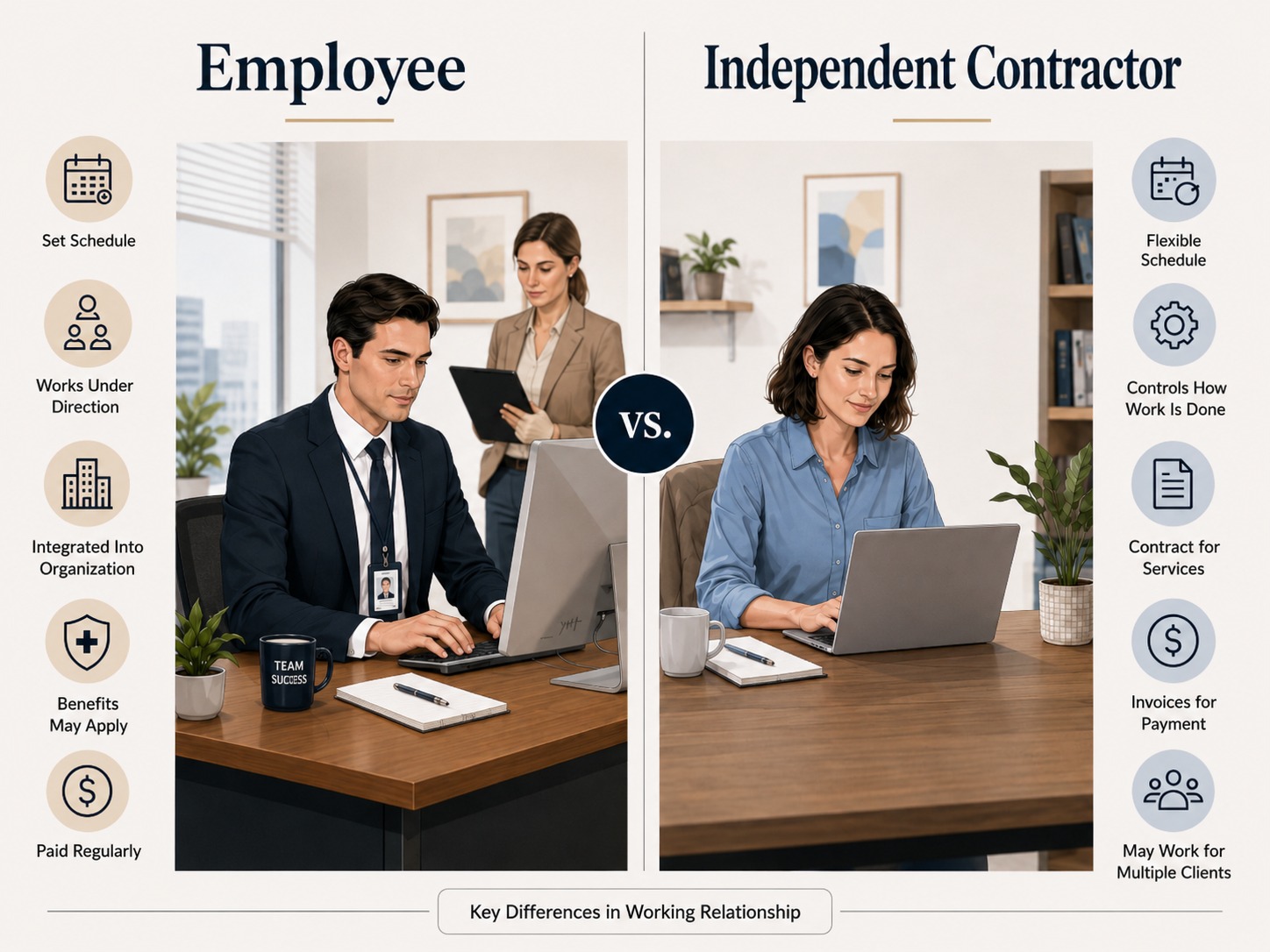
The distinction between these categories dictates a worker's legal rights and an employer's obligations:
Our employment lawyers can advise you on understanding the difference and protect your rights.
Call Us: 604-579-1535 | Email: info@dtlaw.ca
The BC Employment Standards Branch: "Whose Business Is It?"
For the vast majority of workers who are covered by the ESA, the ESB determines their status based on the broad definitions of "employee" and "employer." The ESA is remedial legislation designed to protect as many workers as possible.
The core question the ESB asks is: "Whose business is it?"
To answer this, the ESB looks at several key indicators. A worker is likely an employee if:
Common misconceptions abound. A worker may still be deemed an employee even if they agreed to be a contractor, charge GST, submit invoices instead of using a timecard, or work from home.
Facing an employment classification dispute? Get clarity today.
Our employment lawyers can review your contracts and help you understand your legal standing.
Call Us: 604-579-1535 | Email: info@dtlaw.ca
The Common Law Test: How BC Courts Decide
If a worker is terminated and sues for wrongful dismissal, BC courts will analyze the relationship using a well-established common law test. There is no single conclusive factor; rather, judges look at the totality of the relationship through several lenses:
The Middle Ground: Dependent Contractors
Employment status in BC is not just black and white; it exists on a spectrum. Between the pure employee and the pure independent contractor lies a third category: the dependent contractor.
A dependent contractor is someone who operates their own business but is economically dependent on a single client. For example, if a consultant operates through their own incorporated company but receives 95% of their income from one client over a period of several years, they may be classified as a dependent contractor.
Why does this matter? While dependent contractors do not receive ESA protections like vacation pay, BC courts have ruled that they are entitled to common law reasonable notice of termination. Recent case law affirms that employers often cannot abruptly terminate a dependent contractor without providing adequate notice or severance pay, which can sometimes equate to months of compensation.
The Risks of Misclassification
For employers, the "cost savings" of hiring a contractor can quickly evaporate if a court or tribunal determines the worker was misclassified. The consequences can include:
A Note on Exempt Professionals
When discussing ESA protections, it is important to note that certain licensed professionals are completely excluded from the Employment Standards Act altogether—regardless of whether they operate as employees or independent contractors. Under the BC Employment Standards Regulation, individuals actively practicing in specific regulated professions do not fall under the ESB’s jurisdiction.
Commonly excluded professions include:
Because the ESA does not apply to these workers, their workplace rights, classification disputes, and severance entitlements are governed strictly by the terms of their negotiated contracts and the common law.
Protect Your Rights and Your Business
Whether you are an employer looking to structure your workforce properly and draft bulletproof agreements, or a worker who believes they have been denied their rightful employment entitlements, expert legal guidance is essential. The labels on a contract are just the beginning of the analysis.
To learn more about how we assist both employers and employees with workplace disputes, severance negotiations, and contract drafting, visit our Employment Law Practice Area.
Ready to discuss your employment law needs?
We are here to help protect your rights and your business.
Disclaimer: This article is for informational purposes only and does not constitute legal advice. Employment law is complex and highly fact-specific.


.png)


